
Lanzarote is small: you can drive from one end to the other in just over an hour. But it has its quirks, and knowing them before you arrive saves time, money and the odd headache. We live in the centre of the island, and these are the travel tips our guests ask us for most before they come.
The essentials: hire a car, book your tickets for Timanfaya and the Cueva de los Verdes online (they are no longer sold at the ticket office) and bring a jacket even in summer, because the wind cools things down.
When to go to Lanzarote
Any month is good. It rains very little and temperatures change less than in mainland Europe: in winter, daytime temperatures are usually around 20–22 °C, and in summer, 28–30 °C. What changes most is the wind:
- Winter (November to March): mild temperatures, cool nights and a colder sea. It is high season for European visitors.
- Spring and autumn: for us, the best time. Good weather, fewer people and lower prices than in August.
- Summer: dry heat and more wind (the trade wind blows hard, especially in July and August). August fills up with Spanish holidaymakers.
Some days bring the calima: air full of dust from the Sahara, a yellowish sky and more heat. It usually doesn’t last long.
Torn between months? We cover each one in detail in our guide to the best time to visit Lanzarote, month by month.
Getting around the island
By hire car. It is the way to see the island properly: many of the best spots are far from the towns, and the guaguas (as we call buses here) don’t reach them all or don’t run often. Book your car in advance in high season and pick it up at the airport.
There are buses from the airport to Arrecife and the tourist resorts, and taxis in all the larger towns. They are fine for getting around your area, but not for touring the island.
A couple of things about driving here: there are lots of roundabouts, in some places you can’t park on the hard shoulder (as at Las Grietas) and to reach the Papagayo beaches there is a dirt track with a fee.
Where to stay
It depends on what you are looking for:
- Puerto del Carmen, Costa Teguise and Playa Blanca: the coastal resorts, with hotels, restaurants and the beach within walking distance. Lively and busy.
- Famara: a surfers’ village beneath huge cliffs. Beautiful and quiet, but very windy.
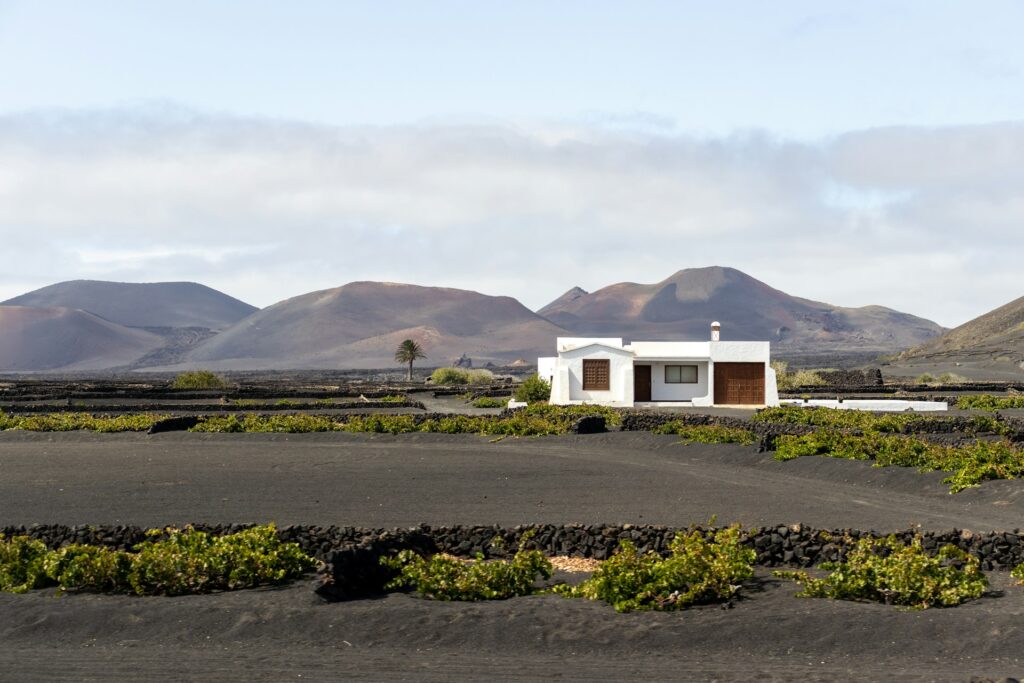
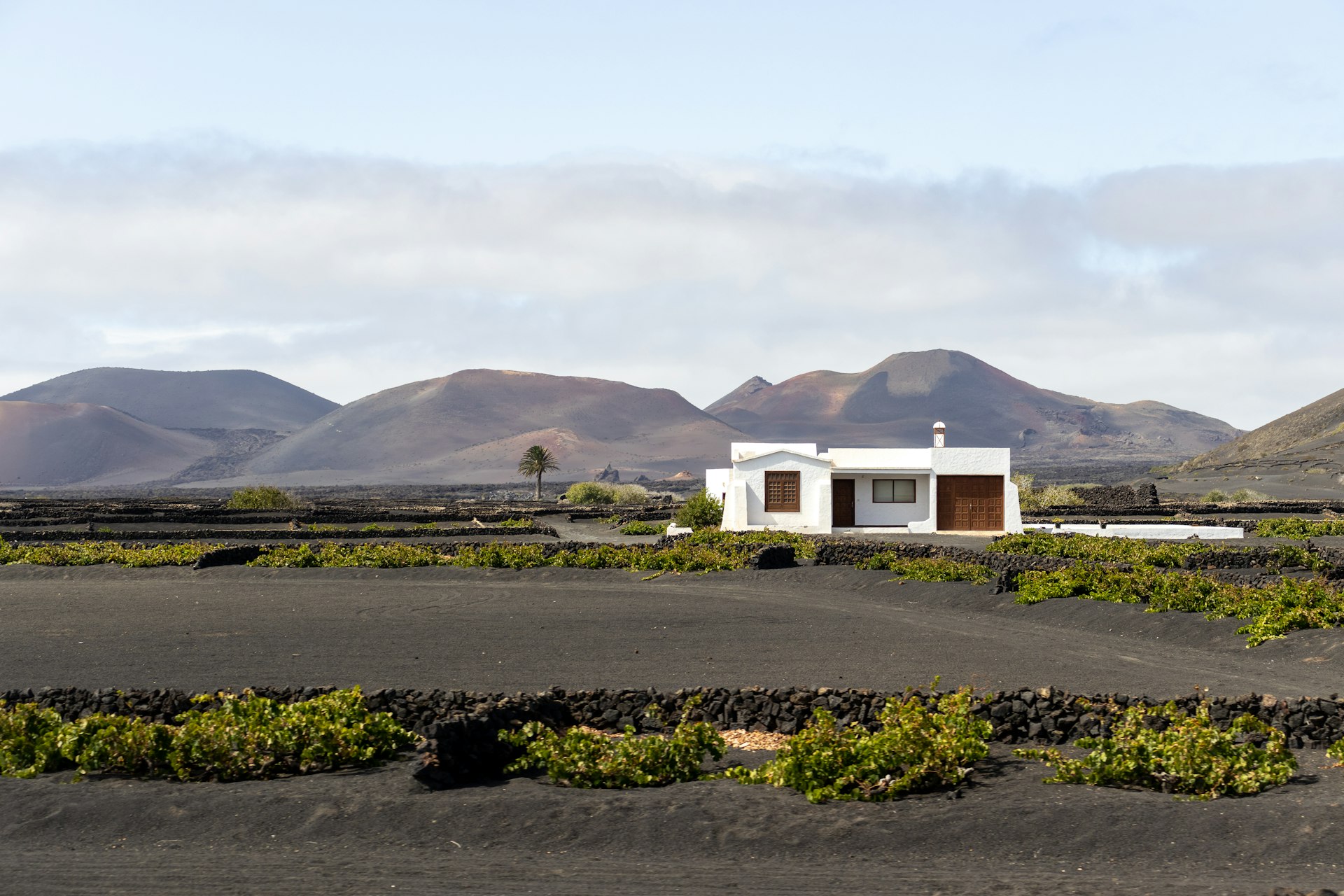
- The interior (San Bartolomé, Tías, La Geria, Haría): rural houses and silence. You are in the middle of everything and can reach any part of the island quickly.
Our cabins are in the interior, among trees, 10 minutes from the airport, 30 from Timanfaya and 35 from Jameos del Agua. If that sounds like your kind of place, you can see them here.
Tickets worth booking online
The island’s most visited sites are run by the Cabildo (the Lanzarote Centres of Art, Culture and Tourism), and tickets are sold at cactlanzarote.com. Since June 2026, two of them are sold online only, with a set day and time:
- Fire Mountains (Timanfaya): €30. Everything you need to know is in our Timanfaya guide.
- Cueva de los Verdes: €17.
The rest can still be bought at the ticket office, though in high season it is better to sort them out beforehand: Jameos del Agua (from €17), Jardín de Cactus and Mirador del Río (€9 each) and Castillo de San José, with the Museum of Contemporary Art (€5.40). The Casa Museo del Campesino is free. Children aged 0 to 6 go free.
Beaches: check the wind first
The wind matters more than the sun. With the trade wind blowing from the north-east, the southern beaches are usually more sheltered:
- South (Papagayo, Playa Blanca, Puerto del Carmen): calm water, good for swimming with children. Papagayo costs €3 per car, card only.
- North and west (Famara, El Golfo): spectacular scenery, but waves and currents. Famara is for walking or surfing; swimming there calls for caution.
- La Graciosa: the small island to the north, with white-sand beaches and no cars. The ferry from Órzola takes about 25 minutes.
Practical tips
- Always wear sun protection, even when it is cloudy or windy: the sun here burns more than it seems.
- A light jacket for the evenings and the viewpoints in the north.
- Closed shoes if you plan to walk: loose lava is sharp and slippery.
- Teguise market: on Sunday mornings, in the old capital. Go early to find parking.
- Try the local food: papas arrugadas with mojo, goat’s cheese, fish of the day and wine from La Geria.
And what to see?
It is all planned out day by day in our 4 days in Lanzarote itinerary, organised by area so you don’t waste time in the car.
Frequently asked questions
How many days do you need to see Lanzarote?
With 4 days you see the essentials. With a week you can add La Graciosa and quiet beach days.
Do you need to hire a car in Lanzarote?
To explore the island, yes. If you only want the beach and to stay in one resort, you can get by with buses and taxis.
What is the best time to travel to Lanzarote?
Spring and autumn: good weather, less wind than in summer and fewer people than in August or at Christmas.
Do you have to buy tickets in advance?
For Timanfaya and the Cueva de los Verdes, yes: they are only sold online and time slots sell out in high season.
Keep reading
More guides to plan your trip to Lanzarote.
