
What to see · 8 min read
The best beaches in Lanzarote and which one to pick each day
By CabanaLanz · 16/10/2026
What are the best beaches in Lanzarote? The short answer: it depends on the wind. On this island you can have huge waves in the north and water as still as a swimming pool in the south on the same day. We live in the centre of Lanzarote all year round, a short drive from almost every coast, so here are the beaches that are really worth it and how to choose one depending on the day and on who you are travelling with.
In short: for calm, turquoise water, Papagayo. With small children, Caletón Blanco at low tide or Playa Flamingo. To see fish, Playa Chica. For a walk and the sunset, Famara, but not for swimming. And if you are short on time, Playa Honda or El Reducto are right next to the airport.
Lanzarote’s beaches at a glance
| Beach | Area | Best for | From our cabins |
|---|---|---|---|
| Papagayo | South | Calm turquoise water | 35 min |
| Playa Dorada and Flamingo | South (Playa Blanca) | Families | 30 min |
| Playa Chica | Puerto del Carmen | Snorkelling and diving | 20 min |
| Playa Grande | Puerto del Carmen | An easy beach day | 20 min |
| Caletón Blanco | North (Órzola) | Small children | 35 min |
| La Garita | North-east (Arrieta) | Families and fresh fish | 20 min |
| Famara | North-west | Surfing, walks and sunsets | 20 min |
| Charco del Palo | North-east | Natural pools (naturist) | 25 min |
| El Reducto | Arrecife | A calm swim in town | 15 min |
| Playa Honda | Next to the airport | A quick swim | 10 min |
The best beaches in Lanzarote, one by one
Papagayo beaches
The most famous beaches on the island, and they have earned it. It is not one beach but a string of coves with golden sand and turquoise water at the southern tip, inside the Los Ajaches Natural Monument, with no hotels or buildings around. The best known is Playa de Papagayo itself; Playa Mujeres is the longest and the one where people spread out best when it gets busy.
You get there on a dirt track from Playa Blanca. If you are not a resident, driving in costs €3 per vehicle and is valid all day; on foot or by bike it is free. There is hardly any shade or facilities, so bring water, food and an umbrella. It is the best choice on very windy days, because the south is usually more sheltered.
Playa Dorada and Playa Flamingo (Playa Blanca)
If you are travelling with children and want comfort, the town of Playa Blanca has two town beaches with very calm water, sheltered from the waves, with showers, sunbeds and restaurants a few steps away. From Playa Dorada you can see the island of Lobos and Fuerteventura across the water. Combine them with Papagayo on the same day.
Playa Chica (Puerto del Carmen)
A small cove with the clearest water on the east coast and surprising marine life: it is where more people than anywhere else on the island do their first snorkel or try diving, and you will see dive centres heading out from here all day. If you only put on a mask once on your trip, make it here. Arrive early: it is small and fills up.
Playa Grande (Puerto del Carmen)
The classic beach of Lanzarote tourism: more than a kilometre of golden sand with a promenade, showers and terraces. It is not wild, but for an easy beach day it is hard to go wrong.
Caletón Blanco (Órzola)
Our favourite with little ones. At the northern tip, next to Órzola, white sand mixes with black lava and forms shallow pools where children can splash around without waves. Go at low tide, when it is at its best, and keep in mind there is no lifeguard. You can combine it with the Mirador del Río or with the boat to La Graciosa, which leaves from Órzola.
Playa de La Garita (Arrieta)
About 800 metres of golden sand in a fishing village in the north-east, fairly sheltered from the wind for that coast, with showers and parking. When there is a swell it becomes a surf beach. The best part comes afterwards: fresh fish in Arrieta. It is close to the Jameos del Agua and the Cueva de los Verdes.
Famara beach
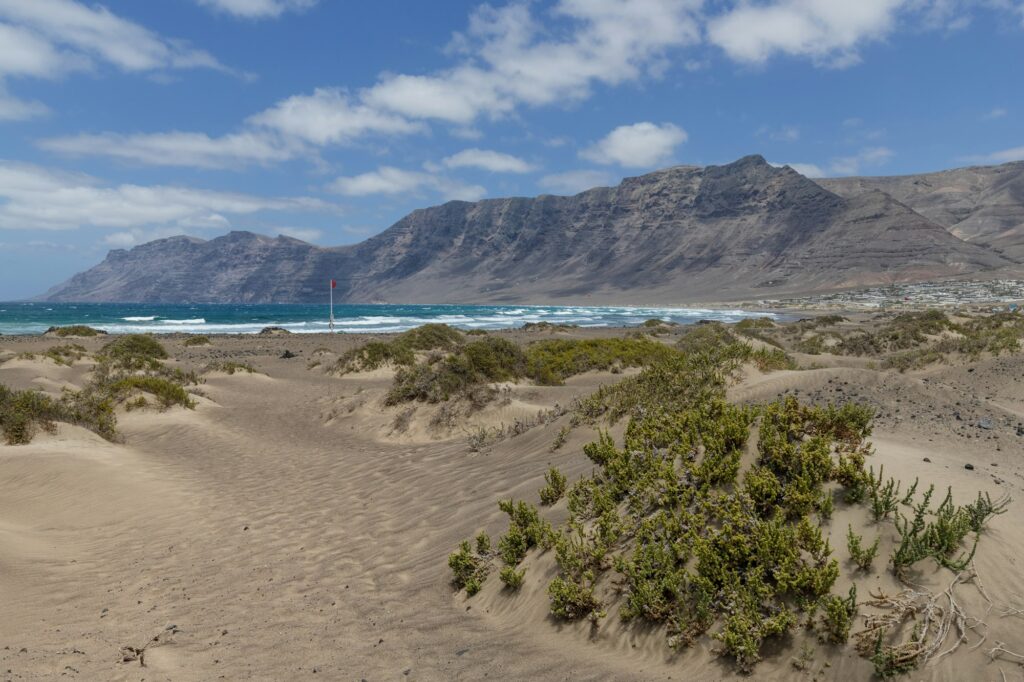
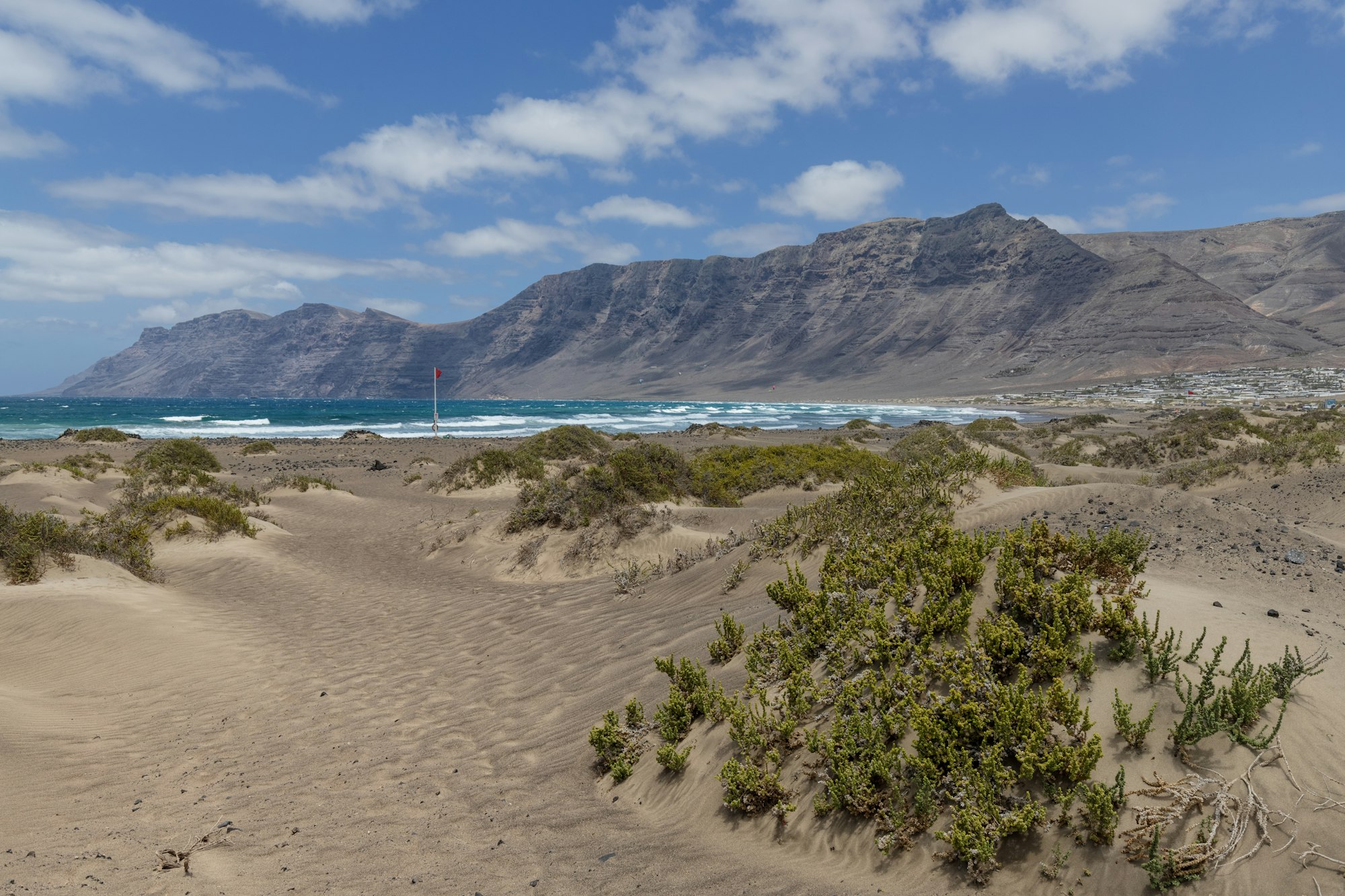
Six kilometres of sand below the Risco de Famara, a cliff about 600 metres high that turns orange at sunset. It is the most spectacular beach on the island and a mecca for surfing and kitesurfing, but it is not for swimming: it has strong waves and currents. Come for a walk at low tide, to watch the surfers or to see the sun go down, and if you want to get in the water, do it with a surf school.
Charco del Palo
A naturist village in the north-east, between Mala and Guatiza, with natural pools among the rocks and ladders to get into the water. Nudity is the norm but not compulsory: you just need to respect it. The seabed is full of life and it is a great snorkelling spot when the sea is calm.
El Reducto (Arrecife)
The capital’s beach: a half-moon of sand with calm water, protected by a rock barrier and with a promenade. It has had a Blue Flag for years and is perfect for a swim before dinner in Arrecife.
Playa Honda
The closest to our farm and to the airport: a long beach with a promenade, ideal for a swim on the day you arrive or the day you leave. Just know that you will see planes taking off almost overhead: if you want peace and quiet, pick another one.
And if you have an extra day: La Graciosa
The boat to La Graciosa, the island without paved roads, leaves from Órzola. Playa Francesa has calm, turquoise water; Playa de las Conchas is one of the most beautiful beaches in the Canaries, but it has dangerous currents and is not for swimming.
Which beach to choose depending on the wind
In Lanzarote the trade wind blows almost all the time; it comes from the north-east and is strongest in summer. Our rule at home is simple:
- Very windy: head south. Papagayo and Playa Blanca are usually more sheltered.
- Calm sea: it is a day for the north. Caletón Blanco, Charco del Palo and La Graciosa are at their best.
- Waves: Famara to watch, or to surf with a school. Swim at another beach.
If you like to plan ahead, also see the best time to visit Lanzarote, with the weather and sea temperature month by month.
Tips for Lanzarote’s beaches
- Respect the flags and, on beaches without a lifeguard, stay out of the water if there are waves. The Atlantic is not the Mediterranean.
- Always wear sunscreen, even when it is cloudy or windy. With a breeze you don’t notice you are burning.
- Water shoes for rocky beaches and natural pools.
- Don’t leave anything visible in the car, especially in the more remote car parks.
- Take your rubbish with you and, if you can, a bit more. When we go to the beach or on a walk, we pick up what we find: the sea here is grateful for it.
Where to stay to explore all the beaches
Since the wind decides each day which coast is best, the most practical thing is to stay in the centre and get around by car. Our cabins are in San Bartolomé, among the trees, 10 minutes from the airport and less than 40 minutes from every beach on this list. In the morning you check the wind, choose your beach, and at night you come back to sleep in silence, under the stars. You can see the cabins here.
More plans? Take a look at our route for 4 days in Lanzarote, how to visit Timanfaya and Las Grietas.
Frequently asked questions
What is the best beach in Lanzarote?
For most people, the Papagayo beaches: golden sand, turquoise water and nothing built around them. With small children, Caletón Blanco; for scenery, Famara.
Are there white sand beaches in Lanzarote?
Yes. The lightest are Caletón Blanco in Órzola, the beaches of La Graciosa and the Papagayo coves, with very pale golden sand. On many others the sand is dark and volcanic.
What is the best beach in Lanzarote for children?
Caletón Blanco at low tide, Playa Flamingo in Playa Blanca and La Garita in Arrieta. All of them have calm water on most days.
Can you swim at Famara?
It is not recommended: it has strong waves and currents almost all year. It is a beach for walking, watching the sunset and surfing with a school.
How much does it cost to visit the Papagayo beaches?
By car, €3 per vehicle for non-residents, valid all day. On foot or by bike from Playa Blanca, it is free.
Are there nudist beaches in Lanzarote?
Yes. The best known is Charco del Palo, a naturist village with natural pools on the north-east coast.
Keep reading
More guides to plan your trip to Lanzarote.
